
Buyer Insights
Elemental Sulfur for Acid Plants in Iraq: Buyer Guide
An acid-plant buyer guide to elemental sulfur quality, physical form, sampling, safe handling, delivery planning and comparable supplier quotations in Iraq.
Published
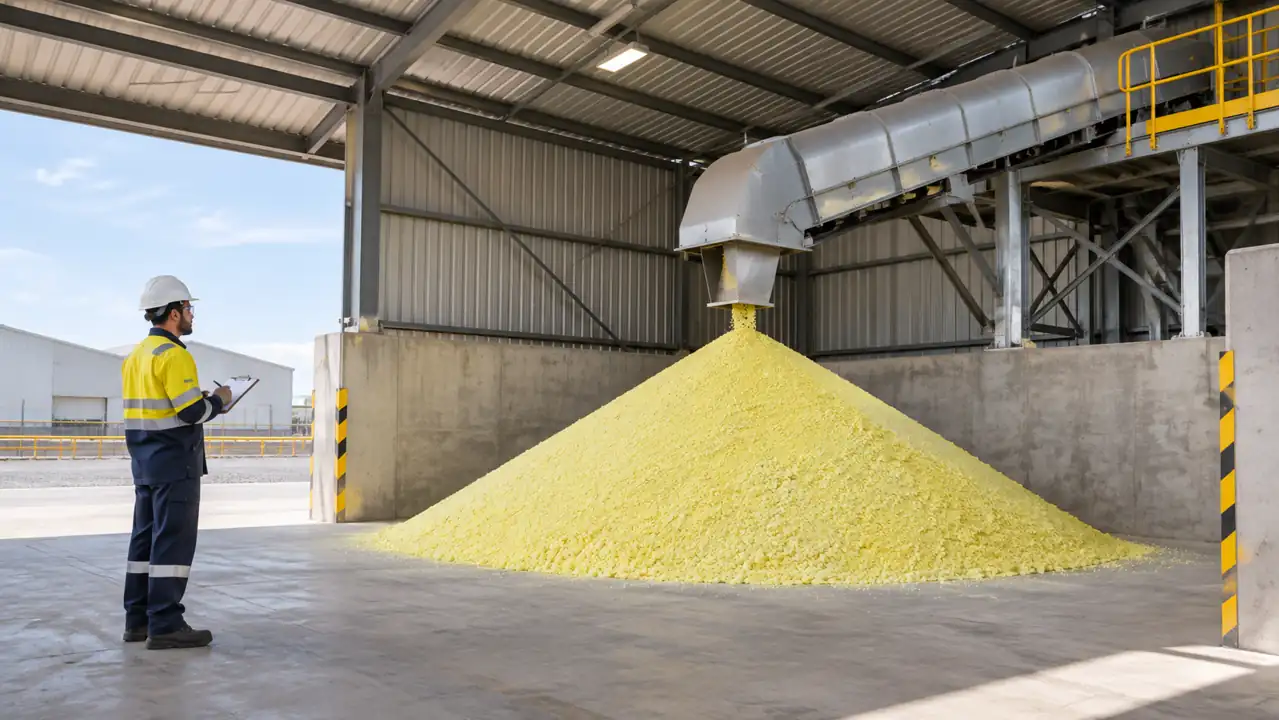
Elemental sulfur is a feedstock decision for a sulfuric-acid plant, not simply a yellow material sold by the tonne. The receiving system, melting and filtration arrangement, process requirements, storage space, dust controls and delivery schedule all influence what a buyer can accept. A quotation that names only “sulfur 99.9%” leaves too many practical questions unanswered. This guide helps procurement, technical and logistics teams prepare a more useful inquiry for elemental sulfur supply in Iraq and compare offers on a consistent basis.
Crude Link Trading coordinates transaction-specific sulfur inquiries as a commercial supplier. Product origin, allocation, form, specification, packaging, inspection and route must be confirmed in the quotation and contract. Our planned manufacturing facility on Gwer Road in Erbil remains under construction; it should not be understood as an operating sulfur source. Plant engineering, safety and regulatory decisions belong to the buyer and its qualified advisers.
Start with the acid plant's approved feedstock envelope
Sulfur-burning acid plants use elemental sulfur as a source of sulfur dioxide, but they do not all have identical receiving or preparation systems. The US Environmental Protection Agency's description of sulfuric-acid manufacturing explains that sulfur may be melted and cleaned before burning in a contact-process plant. That process description is useful context, not a specification for a particular facility. The plant's original design, equipment vendor instructions and operating permit determine the relevant limits and safeguards.
Before inviting offers, identify whether the facility is equipped to receive solid granular or prilled sulfur, another solid form, or molten sulfur. State the required intake rate, storage arrangement, transfer equipment and any restrictions on truck or container access. Do not assume that a plant using molten sulfur internally can receive molten material from an external supplier. Its external delivery equipment may have been designed only for solids.
Form is a handling requirement, not a purity grade
Granules, prills and lump sulfur differ in size, strength and behavior during repeated handling. A form that works well on a covered conveyor may create unacceptable fines in another system, while a material with large pieces may need crushing before melting. Sulfur powder is a separate handling problem and should not be offered as an easy substitute for granules. Our sulfur forms guide explains the broad distinctions; an acid-plant inquiry should go further and state what its own receiving equipment can process.
The purchase specification should describe both chemistry and physical form. It should not rely on a marketing label such as “industrial sulfur” or “acid grade” without the actual acceptance limits. If a supplier proposes an alternative form, technical staff should approve that substitution before the commercial team treats the prices as comparable.
Specify the tests that matter to this process
A useful technical schedule names each parameter, limit, unit, test method and sampling point. The buyer should distinguish a guaranteed contractual limit from a typical value shown on a historical certificate. Not every possible test belongs in every purchase order; the list should reflect the plant's process and the consequences of a nonconforming lot.
Elemental sulfur content and contaminants
Sulfur content is an obvious starting point, but a purity percentage alone does not explain the nature of the remainder. Ash, insoluble material, oil or other contamination may matter to melting, filtration, burners, maintenance or downstream product requirements. The buyer should set specific limits where its process requires them and identify the appropriate analytical methods. A supplier should not imply that a visually bright yellow cargo is necessarily clean enough for an acid plant.
Ask whether the offered material comes from a defined production or storage lot, whether it has been rehandled or blended, and whether the certificate represents the actual shipment. The receiving plant may have different priorities from a fertilizer blender or a distributor selling bagged product. The specification must belong to the intended use, not be copied uncritically from another market.
Moisture, particle size and fines
Moisture can affect flow, caking, storage condition and the amount of material delivered on a dry basis. Particle-size distribution influences conveyor performance, screening, dust generation and the rate at which solids enter a melter. Fines can increase during loading, vibration and discharge, so a pre-loading laboratory result may not fully describe arrival condition. Define where physical condition will be assessed, how samples are taken and what recourse applies if the cargo changes in transit.
The buyer may request a size range, maximum fines fraction or other physical limits, but these should be tied to actual equipment and measurable methods. “Low dust” is too subjective unless the parties agree on an inspection or test basis. Similarly, an image of one sample cannot establish the condition of an entire truck, container or vessel hold.
Acidity and other plant-specific limits
Some facilities include acidity, chlorides, organic material or additional contaminants in their feedstock schedule. Whether those are necessary, and at what limits, depends on the plant design and product requirements. The safest commercial approach is to attach the buyer's approved schedule, ask the supplier to declare each result against it and route any exception to engineering. A trader should coordinate documentation, not invent technical tolerances on behalf of the acid plant.
Match the lot certificate to the cargo
A Certificate of Analysis is valuable only when it can be linked to the material being sold. It should identify the sample, lot or storage source, date, methods, units, results and issuer. The quotation should say whether the COA comes from the producer, a storage operator or an independent laboratory. The issuer's identity should remain visible; repackaging a third-party report as a trader's own test would obscure accountability. Our COA and quality-control guide explains the broader documentation principles.
Agree on a representative sampling plan before loading. For a large lot, one convenient surface scoop may fail to capture differences between sections or layers. The parties should define who samples, when and where, how increments are combined, how samples are sealed, and which laboratory has authority if results disagree. Retained samples and chain-of-custody records can be useful in a later claim, provided the contract describes how they will be used.
Inspection must have a defined scope
“Third-party inspection included” is not enough detail. Does the inspector witness sampling, review quality tests, verify bags or vehicle identity, record seal numbers, check quantity, observe loading condition or confirm warehouse cleanliness? Each is a different service. State the scope, appointment and payment responsibility, reporting timeline and acceptance point. The inspection and testing resource can help a buyer turn that into a written plan.
If an inspector finds wet patches, excessive fines, foreign material or damaged packaging, the response should be clear before dispatch. The contract can specify hold, segregation, rework, rejection, retest or price adjustment where appropriate. Leaving those decisions until the cargo reaches the gate increases delay and dispute risk.
Choose packaging and transport from the receiving end
Solid sulfur may move in bulk, large bags or smaller bags depending on volume, route, origin and destination equipment. Bulk can reduce individual packaging units but requires compatible loading, discharge and covered storage. Bagged material can simplify handling at some sites, but bag strength, inner lining, unit weight, palletization and disposal costs matter. The lowest freight quotation is not necessarily the lowest delivered cost if discharge is slow or product loss is high.
Begin with the destination facility: truck dimensions and access, weighbridge capacity, unloading hours, crane or forklift availability, conveyor arrangements, covered storage space and weather exposure. Then ask bidders to quote on the same delivery basis. If the buyer wants several options, request separate bulk and bagged prices with the included services stated explicitly. The site's packaging solutions overview gives a broader comparison, while this article focuses on acid-plant feedstock.
Protect material condition in transit
Moisture protection and cargo cleanliness should be part of the transport plan. Define whether trucks or containers need covers, liners, inspection before loading and segregation from other cargoes. Identify who is responsible for sealing and documenting the loaded units. At arrival, the receiving team should record obvious damage or contamination before discharge and preserve relevant evidence according to its claim procedure.
For export or cross-border supply, the route must also account for border or port procedures, seasonal weather, cargo-handling points and documentary lead times. Do not treat a quoted transit estimate as a guaranteed delivery date unless the contract actually makes it one. Reserve space in the plant schedule for inspection, clearance and receiving constraints rather than assuming the truck can discharge immediately on arrival.
Treat dust and fire safety as a design issue
Sulfur in a finely divided form presents combustible-dust concerns. OSHA's combustible-dust overview explains the general risk of fine combustible material becoming hazardous when dispersed in air under the right conditions. That source is not a substitute for Iraq-specific law or a site hazard assessment. The buyer's safety team should review its conveyors, transfer points, ventilation, housekeeping, ignition-source controls and emergency procedures before changing sulfur form or supplier.
Do not infer that granules eliminate dust risk. Repeated handling can produce fines, and the condition at delivery may differ from the producer's starting material. A commercial offer can specify intended form and expected limits, but it cannot certify an unreviewed warehouse as safe. The receiving operator should train personnel, maintain equipment and follow its own engineered procedures. This guide does not provide operating temperatures, fire-response instructions or process-control settings.
Compare offers on a common delivered basis
An origin price, a loaded-truck price and a delivered-plant price are not directly comparable. Request a named place under the agreed Incoterm, quantity tolerance, delivery period, loading and unloading responsibilities, inspection scope, document package, payment method and quotation validity. Make taxes, border charges, demurrage and any waiting-time charges explicit where relevant. The buyer can then calculate landed cost without guessing what each seller omitted.
A strong RFQ should also say whether the order is a trial lot, a one-off shipment or a recurring program. For a repeat supply arrangement, define how later lots will be sampled, how changes of origin or plant will be disclosed and whether each shipment needs fresh technical approval. A historical COA and one successful trial should not silently become blanket acceptance for all future deliveries.
A usable comparison matrix
Review each offer against five separate questions. First, does the stated specification meet the plant's approved limits? Second, is the physical form compatible with the receiving system? Third, can the proposed route and packaging protect the material until discharge? Fourth, are the COA, origin, quantity and transport records attributable to the actual lot? Fifth, what is the total delivered cost after freight, inspection, handling and foreseeable exclusions? If any answer is unknown, obtain clarification before ranking offers by price.
An apparently inexpensive cargo may become costly if it needs extra screening, handling, storage or a slower unloading method. Conversely, a higher nominal price may include services that the buyer would otherwise procure separately. Record these differences openly so technical and commercial decision-makers approve the same transaction rather than two different interpretations of it.
A sulfur RFQ checklist for acid-plant buyers
- State the acid plant's approved elemental-sulfur feedstock specification and required test methods.
- Identify the required physical form and any acceptable alternatives for engineering review.
- Give chemical and physical limits, including moisture, ash and particle-size or fines requirements where relevant.
- State the planned quantity, delivery frequency, target period and receiving capacity.
- Describe the named destination, truck access, unloading method and storage protection.
- Define the sample, laboratory, COA issuer, retained samples and disputed-result process.
- List the invoice, origin, quantity, packing and transport documents required for the route.
- Specify inspection scope and the point at which quality and quantity are accepted.
- Request the Incoterm, named place, taxes or customs assumptions, exclusions and payment terms.
- Require disclosure of any change in origin, production lot, form or packaging before dispatch.
Crude Link can review a complete inquiry, seek a transaction-specific sulfur supply option and coordinate the commercial response subject to confirmed origin, availability, quality evidence and route. Send the buyer's approved feedstock schedule, expected quantity and receiving details through the quotation form. For an overview of the available sulfur inquiry categories, see the sulfur product page. This article is general commercial information, not engineering, safety, legal or environmental-compliance advice.
Sources and scope
The process context is drawn from the US EPA's sulfuric-acid manufacturing description. The dust-risk context comes from OSHA's combustible-dust guidance. Neither source defines the specification, legal duties or operating limits for a particular Iraq acid plant; those must be established by the buyer's qualified team and the applicable contract.
Frequently Asked Questions
What should an acid-plant sulfur RFQ specify?
Include the plant-approved feedstock limits, physical form, test methods, quantity, delivery schedule, receiving setup, inspection and document requirements.
Is sulfur purity alone enough to approve a shipment?
No. The buyer may also need limits for moisture, ash, contaminants, particle size and fines, plus a COA traceable to the actual lot.
Can granular and prilled sulfur be substituted automatically?
No. The plant should approve the form against its conveyors, storage, melting system, dust controls and written specification before ordering.
What makes two sulfur quotations comparable?
Use the same specification, quantity, named delivery place and Incoterm; list freight, inspection, unloading, documents, exclusions and payment terms.