
Buyer Insights
Bitumen 80/100 Supplier in Iraq: Export Guide
A practical guide for international buyers evaluating Iraqi Bitumen 80/100 specifications, uses, quality documents, packaging, pricing and export logistics.
Published
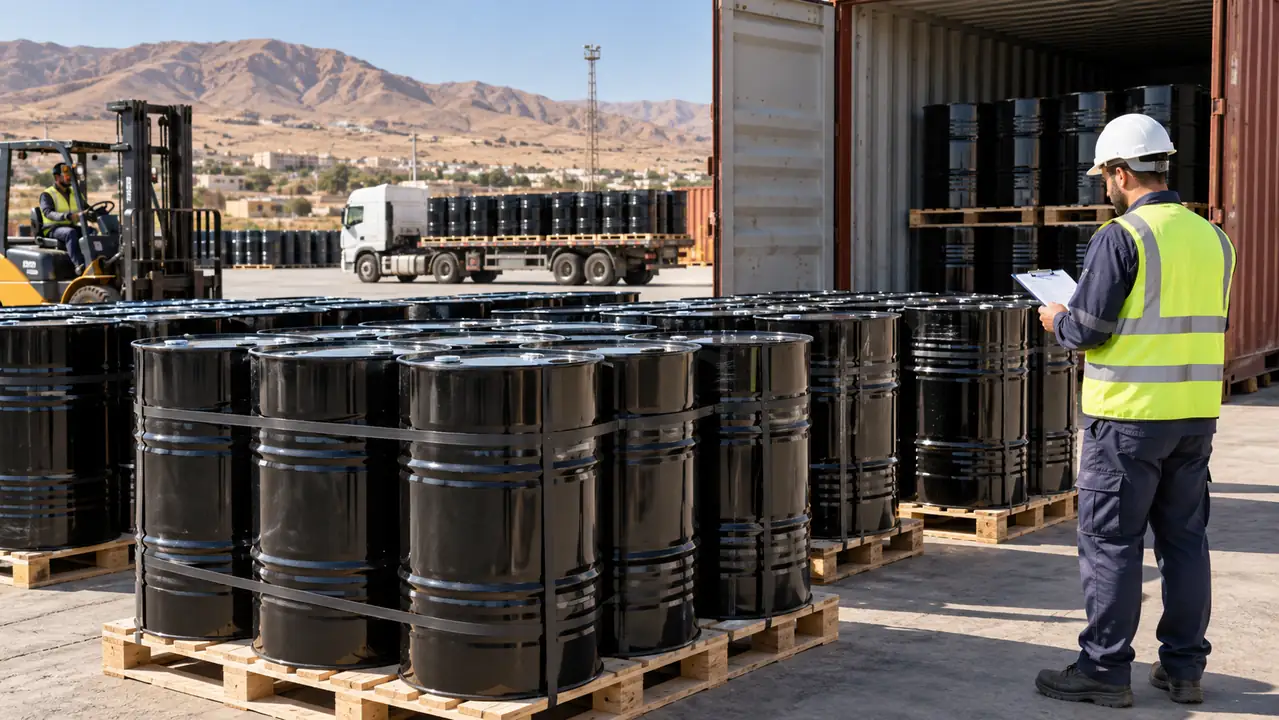
Bitumen 80/100 is a relatively soft penetration-grade binder used in selected paving, maintenance and industrial applications. International buyers may request it when a project specification, climate, traffic model or approved asphalt mix calls for a binder softer than common 60/70 or 70/100 grades. Yet a product name alone is not enough to place a reliable order. The purchaser must define the governing standard, test limits, quantity, packaging, inspection, destination and delivery basis.
This guide explains how to evaluate an Iraq Bitumen 80/100 supplier for export transactions. It focuses on specification control, application fit, quality evidence, drums and bulk logistics, pricing variables and the information required for a workable request for quotation. It does not replace the project engineer's specification or a transaction-specific commercial offer.
Crude Link Trading coordinates petroleum-product supply inquiries as a trader and commercial supply coordinator. Product source, availability, loading point, grade, packaging, route, price and schedule remain subject to written confirmation for each transaction.
What is Bitumen 80/100?
Bitumen 80/100 is a penetration-grade bitumen. Its designation normally refers to a specified penetration interval measured under the test conditions named by the applicable standard. Penetration indicates the relative consistency of the binder; it does not, by itself, describe every performance characteristic relevant to an asphalt mixture.
Compared with a lower-penetration grade, Bitumen 80/100 is generally softer under the same test framework. That characteristic can be useful where the approved design requires greater flexibility or where climatic and pavement conditions justify a softer binder. It can also make the grade unsuitable for another project. Buyers should not treat 80/100 as a universal substitute for 60/70, 70/100 or viscosity-grade products.
Grade names must be tied to a standard
Different markets may use similar grade labels while applying different standards, sampling rules or test methods. An RFQ should state the full standard designation and edition, plus any project-specific limits. The purchase order should identify the controlling specification rather than relying on the words “Bitumen 80/100” alone.
A supplier's certificate of analysis should report the agreed properties with their units and test methods. If a buyer has a tender specification, it should be shared before quotation so exceptions can be identified before production, loading or shipment.
Where Bitumen 80/100 may be used
Potential uses include selected asphalt concrete mixtures, road maintenance, surface treatments and other applications approved by the project's technical authority. Suitability depends on pavement design, aggregate properties, traffic, temperature range, plant conditions and local requirements.
Paving and asphalt production
In asphalt production, the binder must work with the approved aggregate structure and mix design. The choice influences mixing and compaction behavior as well as resistance to deformation, cracking and ageing. A softer grade may assist flexibility in some conditions, but excessive softness can increase deformation risk in high pavement temperatures or heavy traffic.
The correct decision belongs to the project engineer, road authority or specification owner. A commercial supplier should provide accurate product information and test evidence without claiming that one grade is automatically best for every road.
Maintenance and specialized requirements
Some maintenance operations or regional specifications may call for an 80/100 penetration grade. The buyer should still define whether the material will be used directly, modified, blended or incorporated into another manufactured product. Processing history can affect the appropriate acceptance controls.
If the intended use involves emulsions, cutbacks, modified binders or industrial formulations, the purchaser should provide the necessary manufacturing and quality requirements. A standard paving-grade certificate may not answer every question for a downstream process.
Bitumen 80/100 versus nearby grades
Procurement teams often compare 80/100 with 70/100 and 60/70. These grades overlap in commercial discussions but should not be interchanged without technical approval.
Bitumen 80/100 versus 70/100
Bitumen 70/100 is another relatively soft penetration grade used in various paving markets. The nominal penetration ranges differ, and the complete specifications may also set different limits for softening point, ductility, solubility, flash point, loss on heating or ageing-related properties.
Our Bitumen 70/100 supplier guide explains procurement considerations for that grade. When comparing the two, use certificates based on the same standard and test methods. A single penetration result should not replace a full conformity review.
Bitumen 80/100 versus 60/70
Bitumen 60/70 is typically harder than 80/100 within a comparable penetration framework and is widely requested for road construction in warm climates. That does not make 60/70 better in every circumstance. It means the two products serve different design requirements.
Buyers considering 60/70 can review our Iraq Bitumen 60/70 supplier page. The project specification should govern the selection, particularly where high pavement temperatures, slow traffic or heavy axle loads increase rutting concerns.
Key specification and quality checks
A reliable purchase begins with a complete specification. The buyer should identify mandatory tests, acceptance limits, sampling procedures and the party authorized to approve results.
Penetration and softening point
Penetration provides the grade designation, while softening point helps describe temperature-related consistency. Both should be assessed using the agreed test methods. Results obtained under another method or condition may not be directly comparable.
The buyer should examine whether the reported values are internally plausible and within contractual limits. A certificate that lists only the grade name offers less assurance than one showing actual results, methods, dates and traceable batch or shipment information.
Ductility, flash point and solubility
Ductility requirements can provide information about extensibility under specified test conditions. Flash point is relevant to handling and safety controls, while solubility can help indicate the proportion of bituminous material soluble in the named solvent system.
These properties do not independently prove field performance. They form part of a broader specification and should be interpreted together. Buyers should also confirm any requirements related to density, viscosity, water content, loss on heating and residue properties.
Ageing and retained properties
Heating, storage and asphalt production expose binders to ageing. Some specifications require tests after a defined laboratory ageing procedure. The required retained penetration, change in mass, ductility or other property should be stated clearly.
Long or poorly controlled heating during real operations can cause additional hardening. Our bitumen storage, heating and handling guide covers practical questions for tank design, transfer and temperature control.
Certificate of analysis and traceability
The certificate of analysis should identify the product, relevant specification, batch or production reference, sample date, test methods, units, results and responsible laboratory or issuer. Commercial parties should agree when the certificate is issued and whether it represents a production batch, storage tank, loading sample or composite sample.
Review the certificate before shipment
Where timing permits, the buyer should review an offered or pre-shipment certificate before authorizing loading. Any deviations should be resolved in writing. A certificate produced after cargo departure may be too late for an effective commercial decision.
Our COA and quality-control guide explains how documentation, sampling and inspection work together. No document eliminates the need for a clear contract and representative sampling.
Independent inspection
Third-party inspection can include tank identification, sampling, laboratory testing, quantity verification, drum count, container condition, loading supervision and sealing. The scope must be agreed before quotation because it affects cost and timing.
The parties should identify the inspection company, sampling point, test laboratory, methods, report recipients and procedure for disputed results. “Inspection included” is too vague unless the actual responsibilities are listed.
Packaging options for export
Bitumen 80/100 may be offered in steel drums, bulk tankers or other approved packaging depending on source, route and destination. Packaging availability is transaction-specific.
New steel drums
Steel drums are familiar in many importing markets and can support containerized or break-bulk shipments. An RFQ should state drum type, nominal net weight, steel thickness where required, closure, palletization, markings and tolerance.
Buyers should compare net product weight rather than counting drums alone. Drum tare, pallet weight and filling tolerance affect gross cargo weight and container payload. At destination, the receiver also needs a controlled decanting process and a plan for empty steel.
Bulk supply
Bulk transport can reduce packaging waste and suit larger continuous users, but it requires suitable loading, transport, reception and heated storage infrastructure. The buyer should confirm tanker compatibility, heating systems, hose connections, unloading rate, tank capacity and temperature controls.
For international movements, route availability and border or port requirements must be checked before price discussions are treated as executable. A nominal bulk price is not useful if the receiving terminal cannot handle the proposed vehicle or vessel.
Alternative packaging
Some transactions may consider jumbo bags or other systems, subject to product suitability, supplier capability and destination acceptance. The buyer should evaluate lifting, storage, melting and packaging integrity. Our bitumen drums versus jumbo bags comparison provides a broader decision framework.
Export logistics from Iraq
The practical route depends on the loading location, border or port, destination, shipment size and packaging. An Iraqi Bitumen 80/100 exporter should state the proposed delivery chain and commercial responsibility rather than using general statements about worldwide delivery.
Inland transport and loading point
Inland haulage can materially affect price and schedule. The quotation should identify the named loading point or delivery place, expected truck or container configuration, loading hours and documentation requirements.
If cargo is containerized, the plan should consider payload limits, weight distribution, clean container condition, securing, verified gross mass and safe unloading. Packaging dimensions and actual filled weight determine how much net bitumen can be loaded.
Port, border and destination planning
The buyer should provide the destination country, port, city or border point. Transit permissions, carrier acceptance, documentation and seasonal constraints can change. Freight indications should therefore have a validity period and a clearly stated basis.
For CFR or CIF requests, the discharge port and shipment window are essential. For land delivery, the named place and border assumptions must be explicit. Import clearance, duties, taxes and local delivery are not included unless the written offer says so.
Iraq Bitumen 80/100 price factors
There is no permanent universal Iraq Bitumen 80/100 price. A quotation reflects product source, specification, quantity, packing, inspection, inland transport, loading location, freight, Incoterm, payment terms and market timing.
Product and packaging costs
A strict or unusual specification may require additional testing, segregation or sourcing. Steel drums, pallets, markings and container loading create costs that differ from bulk supply. Compare offers using the same net quantity and packaging basis.
The Iraq bitumen price guide explains the main quotation variables. It is usually more useful to request a current written offer than to rely on an undated price posted online.
Delivery basis and freight
EXW, FCA, FOB, CFR and CIF quotations allocate responsibilities differently. The offer should identify the named place or port and the applicable Incoterms edition. Buyers should not compare an ex-loading-point figure directly with a delivered port figure.
Freight can change with equipment, route, fuel, congestion and carrier availability. A commercial quotation should state validity, expected shipment window and what happens if freight changes before booking.
Payment and transaction controls
Payment method, banking costs, credit exposure, currency and documentary requirements influence the offer. Buyers should independently verify the supplier's corporate identity and bank details through trusted channels before transferring funds.
A low headline price without a clear specification, source, packing basis, route and payment structure may expose the buyer to greater risk than a properly documented offer.
Documents commonly required
The exact document set depends on origin, destination, payment method and contract. It may include:
- Commercial invoice and packing list.
- Certificate of analysis.
- Safety data sheet.
- Certificate of origin.
- Weight or quantity record.
- Transport document.
- Inspection certificate, if agreed.
- Container, seal or loading report, if required.
- Packaging or pallet declarations for the destination.
Descriptions, quantities and references should be consistent across commercial, transport and banking documents. The buyer should provide documentary-credit requirements early enough for feasibility review.
How to prepare a complete RFQ
A complete RFQ helps the supplier assess availability and avoids repeated clarification. Include:
- Product: Bitumen 80/100.
- Governing standard, edition and full test limits.
- Total quantity and shipment schedule.
- Packaging, unit net weight and pallet requirements.
- Destination and requested Incoterm with named place.
- Required inspection, sampling and laboratory scope.
- Required certificates, origin and transport documents.
- Labeling and language requirements.
- Receiving, storage and heating capabilities.
- Payment method, currency and quotation deadline.
If the specification allows alternatives, identify them clearly. Do not ask the supplier to choose a substitute grade without the project owner's authorization.
How to evaluate a Bitumen 80/100 supplier
Evaluate the complete offer, not only price. A capable supplier or coordinator should state product source or sourcing basis, specification, quantity, packaging, inspection, loading point, route, document package, schedule, payment terms and exceptions.
Commercial clarity
Every offer should identify what is included and excluded. Review quantity tolerance, delivery window, price validity, claims procedure and the point at which risk and cost transfer. Resolve inconsistent terms before signing or paying.
Technical credibility
Technical credibility comes from accurate, traceable information rather than absolute marketing claims. The supplier should not promise universal suitability or guaranteed field performance. The project engineer remains responsible for approving the grade and mix design.
Communication and verification
Prompt answers are useful, but buyers should verify important claims through documents, inspection and independent checks. Confirm company details, authorized contacts and bank information. Record material changes to the agreed specification or route in writing.
For a broader view of available product categories, visit our petroleum products supplier in Iraq page.
Request a Bitumen 80/100 quotation
International buyers can send the grade, standard, quantity, packaging, destination, Incoterm, schedule and document requirements through our request-for-quotation guide or contact form.
A detailed inquiry allows Crude Link Trading to review possible transaction-specific supply and logistics arrangements. Website information is educational and is not a firm offer. Availability, origin, producer, specification, packing, route, price and delivery terms are confirmed only in formal commercial documents.
Frequently Asked Questions
What is Bitumen 80/100 used for?
It may be used in selected paving, maintenance and industrial applications when the approved project specification and mix design require this penetration grade.
Is Bitumen 80/100 softer than Bitumen 60/70?
Within a comparable penetration test framework, 80/100 is generally softer than 60/70, but grades should not be substituted without technical approval.
Can Bitumen 80/100 be exported from Iraq in drums?
Transaction-specific offers may include steel drums, bulk supply or other approved packaging, subject to source, route, quantity and written confirmation.
What determines the Iraq Bitumen 80/100 price?
Specification, source, quantity, packaging, inspection, loading location, freight, Incoterm, payment terms and market timing all affect the quotation.
What should a Bitumen 80/100 RFQ include?
State the governing standard, test limits, quantity, packaging, destination, Incoterm, schedule, inspection, documents and payment method.