
Safety note: This article provides general procurement guidance, not facility-specific engineering or operating instructions. Follow applicable law, the supplier's safety data, equipment manuals and a competent site risk assessment.
Why bitumen storage and handling matter
Protecting quality from delivery to use
Bitumen normally arrives as a hot liquid or in packaging that must be heated before use. Its condition can change when it is held too hot, heated unevenly, contaminated, exposed to water or stored longer than planned. A sound storage system therefore protects more than pumpability. It helps preserve the approved grade, reduces avoidable energy use and supports consistent asphalt production. Buyers should connect the supplier documentation, receiving procedure, tank assignment, heating method, sampling plan and plant schedule before the first delivery arrives.
A system rather than a single temperature
There is no universal bitumen storage temperature suitable for every grade and operation. Penetration grades, viscosity grades, polymer-modified binders, oxidized products and emulsions behave differently. Tank geometry, heating surface, insulation, circulation, ambient conditions and storage duration also matter. The correct operating window must come from the product supplier's technical data and safety data, the plant design and a site-specific risk assessment. This guide explains the questions buyers should ask; it does not replace the instructions for a particular product or facility.
Choosing a bitumen storage temperature
Use the lowest practical temperature
The general objective is to keep the binder fluid enough for safe circulation, pumping and production while avoiding unnecessary heat exposure. Higher temperatures accelerate oxidation, can harden the binder, increase fumes and waste fuel. Lower temperatures may make transfer slow, overload pumps or allow a line to block. The operating team should distinguish between a short transfer temperature, a routine working temperature and a longer-term holding temperature. A control setpoint should include alarms, independent verification and an escalation procedure rather than relying on one instrument.
Maximum limits are not normal targets
Eurobitume guidance states that storage temperatures should not exceed 200°C for paving bitumens and 230°C for industrial bitumens, and that material should remain at least 30°C below its flash point or comply with the lower national limit. These are maximum safety boundaries, not recommended everyday setpoints. Product-specific limits may be lower. Polymer-modified and specialty binders require supplier advice because prolonged heat can damage their structure. Operators should use the applicable safety data sheet and written supplier recommendation for each tanked product.
Short-term and long-term storage planning
Storage duration changes the decision
A binder held for several hours during continuous production has different needs from inventory stored for weeks. Eurobitume's storage guidance provides lower recommended temperatures for medium- and long-term storage than for short-term storage, with values varying by grade. Lower holding temperatures can reduce aging and energy consumption, but the plan must allow enough time for controlled reheating. Purchasing, logistics and production teams should share expected consumption, delivery timing and shutdown plans so the tank is not repeatedly heated and cooled without purpose.
Manage inventory and tank turnover
Good inventory control records the grade, supplier, batch or delivery reference, arrival date, quantity, test status and assigned tank. First-in, first-out use may help limit unnecessary residence time when quality and project rules permit. Tanks should not be topped up automatically when the contents are uncertain or when different binders could be incompatible. Before changing grades, the operator should assess residual volume, cleaning requirements and the risk of off-specification blending. A clearly labelled tank map and controlled valve lineup reduce costly mistakes.
Heating bitumen safely and evenly
Avoid localized overheating
Heating coils, thermal-fluid systems or electric heaters must be designed and maintained for the tank. Exposed heating surfaces can create localized hot spots, coke deposits and fire risk. Heating elements should remain properly immersed as required by the equipment design. After a shutdown, temperature should be increased gradually. Eurobitume recommends small thermostat increases of about 5°C to 10°C and circulation once the product reaches its minimum pumping temperature, where the system allows. The site's engineer and written operating procedure control the actual sequence.
Reheating requires time and verification
Trying to recover a cold tank immediately before production encourages aggressive heating and poor temperature distribution. The team should estimate heat-up time from tank volume, insulation, heater capacity, ambient temperature and binder properties. Independent temperature readings at suitable locations can identify stratification or instrument error. Before use after a long shutdown, representative testing may be appropriate to confirm that the binder still meets the required specification. Operators should document the heat-up, circulation and release decision rather than treating temperature alone as proof of quality.
Tank design, insulation and instrumentation
Essential storage-system features
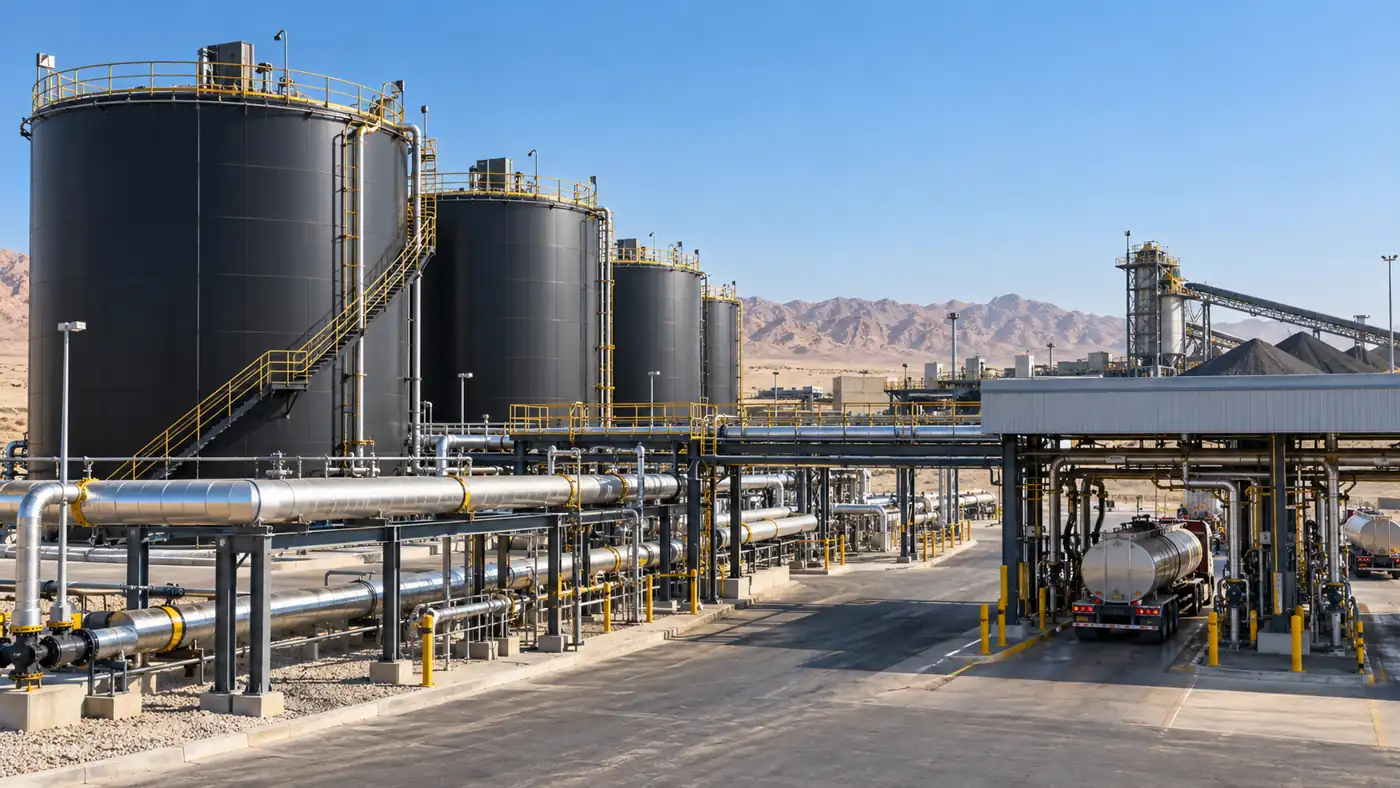
A suitable tank needs compatible materials, adequate working capacity, correctly designed heating, insulation, level measurement, temperature indication, vents and safe access. Overfill protection and independent high-level alarms should be considered according to the facility's engineering standard and risk assessment. Tank vents must not be obstructed, and the system should address hydrogen sulfide and vapor hazards where applicable. Bunding or secondary containment, drainage control and emergency planning help manage an accidental release. Design and modification work belongs with qualified engineers and competent contractors.
Maintain what cannot be seen
Insulation damage, failed tracing, inaccurate gauges, blocked vents, leaking valves and degraded seals can develop gradually. A preventive-maintenance program should define inspection intervals, calibration, proof testing and repair responsibilities. Temperature sensors should be checked against an independent reference. Level instruments and alarms need functional testing, not only visual inspection. Records should identify recurring faults and confirm that temporary repairs are removed. A clean exterior and readable labels help, but mechanical integrity and instrument reliability determine whether the system can be operated safely.
Pumps, pipelines and circulation
Keep the transfer path ready
Bitumen transfer lines require suitable insulation and heating or tracing so material remains pumpable from tank to loading point or asphalt plant. Valves, strainers, pumps, hoses and meters must be rated for the product and temperature. Long dead legs can trap material, cool and block. Operators should know the approved warm-up, circulation, isolation and shutdown sequence. Pumping against a closed valve or solid plug can damage equipment and release hot material. Pressure limits, relief arrangements and interlocks should reflect the system design.
Prevent contamination in shared systems
A shared manifold creates a risk of sending the wrong binder to a tank or introducing fuel, water, emulsion or another incompatible product. Dedicated lines are preferable where the consequence is serious. Otherwise, positive identification, segregated connections, locked valve positions and a documented line-clearance procedure are essential. Eurobitume guidance warns against using steam to clear bitumen hoses or pipelines because water entering hot bitumen can cause violent foaming or boil-over. Only the approved dry clearing method and site procedure should be used.
Receiving and unloading bulk bitumen
Prepare before the tanker arrives
The receiving site should confirm the delivery reference, product grade, assigned tank, available safe capacity, sampling requirement, unloading point and responsible personnel before connection. The storage tank must be ready, correctly lined up and free from water. Driver and site operator should agree on communication and emergency stop arrangements. Paperwork should match the order, vehicle and product. A delivery should not proceed merely because the tanker is waiting; discrepancies in grade, seal, documentation, temperature or capacity require resolution before unloading.
Control the discharge
The connection area should be stable, illuminated and protected from uncontrolled vehicle movement. Hoses must be clean, dry, supported and suitable for hot bitumen. Personnel need task-specific training and protective equipment selected through the site risk assessment. The receiving operator should monitor tank level, temperature, pressure where relevant and the discharge area throughout transfer. After unloading, the approved disconnection and line-clearing process should minimize trapped hot material. Quantity records, samples and delivery documents should be completed while the event remains traceable.
Water, boil-over and contamination risks
Keep water out of hot bitumen
Water can expand rapidly when it contacts hot bitumen, causing foaming, boil-over and ejection of material. Tanks, hoses and pipelines must be protected from rainwater, condensation, wash water and steam. After maintenance or a long outage, the return-to-service plan should confirm that the tank and transfer system are dry and safe. Operators must never assume an empty-looking vessel is ready. The inspection, drying and authorization method should be defined by competent personnel and supported by the facility's permit and isolation procedures.
Investigate abnormal behavior
Unexpected foaming, noise, vibration, odor, pressure, rapid level movement or temperature variation may indicate water, contamination, blockage or equipment failure. The correct response is to stop or isolate the operation according to the emergency procedure, keep people clear and escalate to trained site personnel. Improvised opening, heating or flushing can worsen the hazard. Samples and records should be preserved for investigation. Corrective action should address the source, not only the immediate symptom, before the tank or line returns to service.
Worker safety and emergency readiness
Hot bitumen hazards
Hot bitumen can cause severe thermal burns. Fumes may irritate, hydrogen sulfide can accumulate in confined or poorly ventilated spaces, and overheating can create flammable decomposition products. Site controls may include restricted access, ventilation, gas monitoring, guarding, remote operation and suitable emergency equipment. Protective clothing often includes a face shield, helmet, heat-resistant gloves, covered arms and legs, and suitable boots, but the exact selection must follow the local risk assessment and law. Training must cover normal work and credible abnormal events.
Plan before an emergency
Emergency arrangements should address burns, spills, fire, exposure, equipment failure and loss of containment. Workers need clear alarm, isolation, evacuation and communication methods. First-aid provisions and emergency showers must be suitable for the site and maintained. Confined-space entry requires a formal program; a storage tank must never be entered casually. Contractors, drivers and visitors need relevant induction. Drills and incident reviews help verify that written plans can work under pressure. Local emergency services may also need information about the facility and stored products.
Quality control during storage
Sampling and traceability
A storage-quality plan should define when samples are taken, how they are made representative, who seals them, where they are tested and how retained samples are stored. Delivery samples, tank samples and production samples answer different questions. Results must identify the grade, tank, date, batch or delivery and test method. If different deliveries are blended in one tank, the traceability record should show the sequence and quantities. Quality release should be separated from commercial assumptions so production does not consume unverified material.
Signs of storage-related change
Prolonged or excessive heating can increase viscosity and harden paving bitumen. Contamination may shift flash point, water content, consistency or other properties. Polymer-modified products may separate or degrade if stored outside supplier instructions. Visual appearance alone cannot prove conformity. When storage conditions exceed the approved window, instruments fail, contamination is suspected or inventory has remained unused for a long period, the responsible technical team should assess sampling and retesting before release. The contract specification and approved laboratory methods determine acceptance.
A practical buyer and plant checklist
Before ordering and delivery
Confirm the exact grade and standard, supplier storage guidance, safety data sheet, planned quantity, tank capacity, expected residence time, heating capability, transfer compatibility and sampling plan. Align the delivery schedule with production and ensure the receiving tank will have safe working capacity. Define documents, inspection and rejection procedures in the purchase terms. For a new product, involve operations, quality, safety and maintenance before the order is placed. A technically attractive quotation is not executable when the receiving system cannot safely store or unload the material.
How Crude Link supports the inquiry
Crude Link coordinates qualified bitumen inquiries for Iraq, the Kurdistan Region and selected export markets. Buyers can provide the grade, specification, quantity, packing or bulk preference, destination, schedule, Incoterm, inspection requirements and storage limitations. We can then review transaction-specific supply and logistics options. Crude Link does not design or operate the buyer's storage system; the facility owner and its competent specialists remain responsible for engineering, safety, legal compliance, operating procedures and product acceptance.
Frequently asked questions
What is the correct bitumen storage temperature?
It depends on the grade, storage duration, equipment and supplier instructions. Use the lowest practical temperature that maintains safe pumpability and follow the product technical and safety data.
Can all bitumen grades share one storage tank?
Not automatically. Residual material and incompatible grades can affect quality. Confirm compatibility, cleaning and changeover requirements before assigning a tank.
Why must water be kept out of hot bitumen?
Water can rapidly turn to steam and cause foaming, boil-over or ejection of hot material. Tanks, hoses and lines must be dry before use.
Should bitumen be reheated quickly after shutdown?
No universal procedure applies. Eurobitume advises gradual thermostat increases and circulation when the minimum pumping temperature is reached, subject to the equipment design and site risk assessment.