
Buyer Insights
Bitumen Steel Drum Packing for Export: Buyer Guide
A practical buyer guide to steel drum construction, net-weight control, closures, markings, palletizing, inspection and container loading for export bitumen shipments.
Published
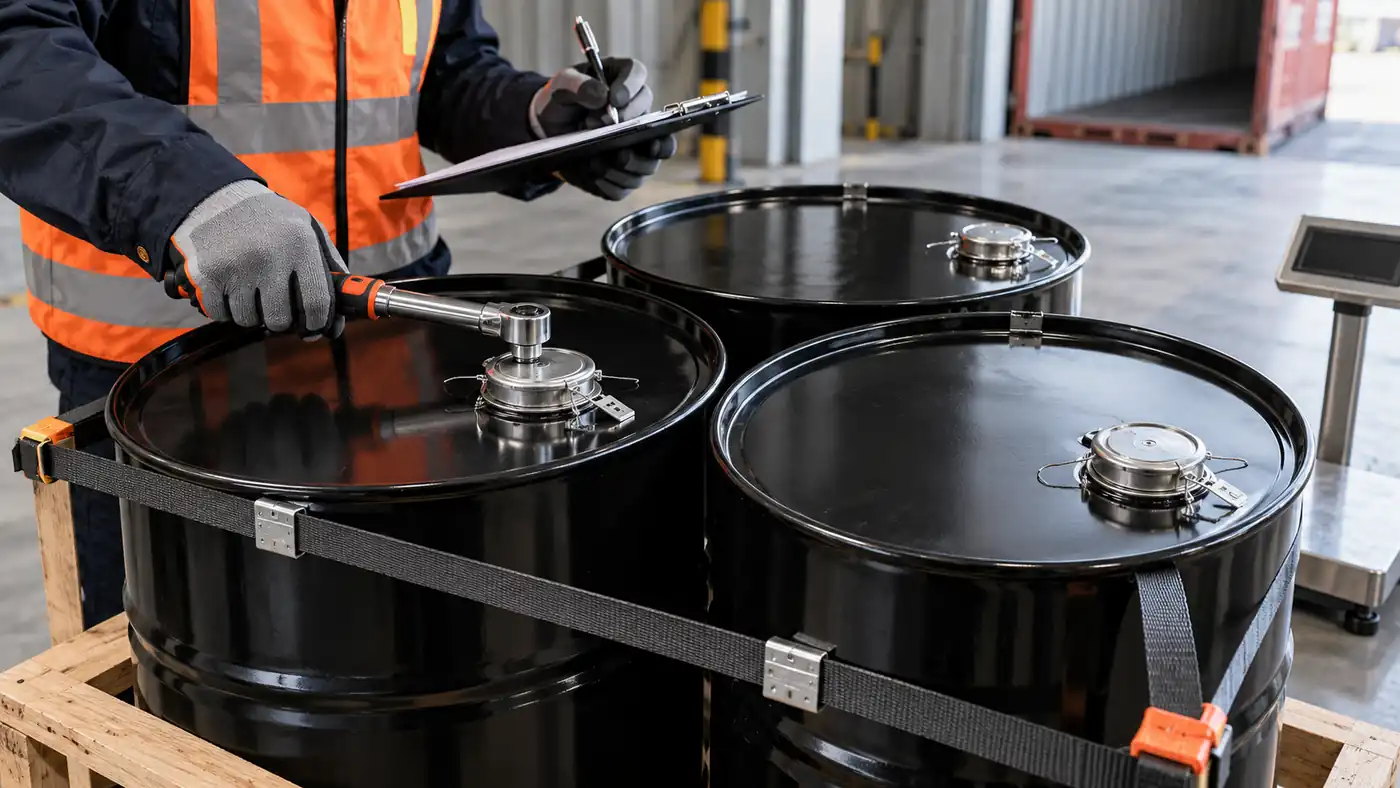
Steel drums remain a practical export format for road-grade bitumen when buyers need manageable units, containerized transport and flexible delivery to projects that do not receive bulk tanker cargo. Yet the word “drum” does not describe a complete packing specification. A commercially useful requirement must identify the drum construction, net-weight basis, closure system, markings, handling method, inspection scope and loading arrangement.
This guide explains bitumen steel drum packing from a buyer’s perspective. It does not prescribe one universal package because drum designs, transport rules, destination conditions and project requirements differ. Instead, it shows which details should be agreed before quotation and how buyers can connect the package specification to weighing, inspection and container loading.
Buyers comparing grades should begin with the Crude Link bitumen supply overview. For a grade-specific commercial discussion, see our Iraq Bitumen 60/70 supplier guide. Final packaging, quantity, documentation and delivery terms are confirmed in the quotation and contract.
Why Steel Drum Packing Needs a Written Specification
A drum protects the material, communicates shipment identity and provides a unit for counting and handling. A weak specification can create disagreements even when the bitumen itself meets the agreed laboratory limits.
For example, a quotation may state a number of drums without defining the nominal net content or tolerance. Another quotation may use the same nominal weight but a different tare, closure or steel construction. Buyers comparing only the price per drum can therefore compare packages that are not commercially equivalent.
A clear bitumen steel drum packing schedule should answer the following questions:
- Is the drum new or reconditioned?
- What construction and closure are required?
- Is the quoted quantity based on net weight, gross weight or package count?
- What bitumen drum weight and tolerance apply?
- Which markings must appear on each unit or pallet?
- Will the drums be palletized, strapped or loaded loose?
- How will count, weight, condition and seals be checked?
- Who is responsible for container suitability and securing?
These details should be settled before production begins. A packing instruction issued after drums are filled may be too late to correct the most important differences.
Drum Construction and Condition
The contract should describe the accepted drum type without relying on informal terms such as “standard export drum.” The suitable construction depends on the product, filling process, transport route and customer requirements.
New and Reconditioned Drums
New drums offer predictable construction and avoid uncertainty about previous contents. Some markets may accept properly reconditioned drums, but that acceptance should be explicit. Reconditioned packaging requires controls for cleanliness, integrity, prior-product risk and regulatory compliance.
If the buyer requires new drums, the purchase order should say so. If reconditioned drums are permitted, the inspection and certification requirements should be defined rather than assumed.
Steel Thickness and Structural Performance
Steel thickness affects package strength, tare and resistance to deformation during handling. However, quoting one thickness number without explaining where it applies can be misleading because the body, lid and base may use different material specifications.
The buyer should request the supplier’s drum data and confirm that the design is appropriate for the expected filling temperature, stacking arrangement, lifting method and transport route. Structural suitability should be evaluated as a complete package rather than through a single marketing claim.
Interior Cleanliness and Compatibility
The inside of the drum should be clean, dry and compatible with the contracted product. Water, dust, solvent or residue can affect product quality or create handling problems. Inspection access is limited once a drum is filled, so cleanliness controls belong in the packing process.
The parties should also agree whether any internal coating or liner is required. A liner should not be added merely because it sounds protective; it must be suitable for the filling temperature, product and end-use handling method.
Understanding Bitumen Drum Weight
Weight is one of the most common sources of commercial confusion. Buyers should distinguish nominal net content, actual net content, tare weight and gross weight.
Net, Tare and Gross Weight
Net weight is the bitumen contained in the package. Tare weight is the empty packaging weight, including components defined by the weighing method. Gross weight is the filled drum and its packaging.
The sales contract should establish which figure controls invoicing. If the transaction is sold by metric tonne, the method used to calculate the shipped net quantity should be clear. A drum count multiplied by a nominal figure may not be equivalent to individually verified net weights.
Nominal Weight and Tolerance
Suppliers may offer different nominal drum sizes depending on production equipment, destination practice and transport planning. Rather than assuming one universal value, buyers should state the desired nominal net content and acceptable tolerance.
The tolerance should explain whether it applies to each drum, an average across a lot, or the total shipment. These are different acceptance rules. A small unit variation can become commercially significant across a large shipment.
Weighing Method
The inspection plan should state whether every drum is weighed, a defined sample is weighed, or the total quantity is established through another agreed control. The report should identify the scale, weighing date and calculation method where these items are within scope.
If only selected drums are checked, the report should not imply that every package was individually verified. Buyers can combine sample weighing with production records, total cargo weight and package count, but the contract should explain which evidence controls acceptance.
Filling Temperature and Headspace Control
Bitumen must be fluid enough for controlled filling, but excessive heating can affect safety and product quality. The operating procedure should use an appropriate temperature range for the grade and equipment. Site-specific procedures, product data and applicable safety requirements govern the actual limits.
The drum should not be filled beyond the level permitted by the package design. Appropriate headspace accommodates operational variation and thermal effects. Overfilling can contaminate closure surfaces, interfere with sealing and increase leakage risk.
After filling, the package should be handled according to the facility’s controlled cooling and closure procedure. Moving or stacking drums before they are ready can distort packaging or damage closures.
Buyers who also receive bulk cargo can review our bitumen storage, heating and handling guide for the wider temperature-control context.
Steel Drum Sealing and Closure Inspection
Steel drum sealing provides physical containment and evidence that the package was closed under the supplier’s process. The closure specification should identify the lid or bung arrangement, sealing components and any tamper-evident device required by the contract.
Closure Components
Closure surfaces should be clean and undamaged. Gaskets or other sealing components must be compatible with the product and expected temperature. The correct tools and controlled closure method should be used rather than improvised tightening.
Where a torque requirement forms part of the drum manufacturer’s procedure, it should be applied using suitable equipment. A visible closure alone does not prove that the correct process was followed.
Tamper-Evident Seals
Numbered or identifiable seals can strengthen traceability when their numbers are recorded against the shipment. A seal is useful only if it is applied to the correct package, remains intact and is connected to reliable records.
The buyer should specify whether seals are required on individual drums, pallet groups, vehicles or containers. Container seals do not replace drum closures; they serve a different custody function.
Leak and Condition Checks
Before palletizing or loading, personnel should inspect for leakage, lid damage, deformed rims, punctures, unstable bases and contamination. A clean drum may show marks from ordinary handling, but visible conditions that affect containment or safe handling should be segregated and addressed.
The inspection report should identify the method used. A full visual check of every unit is different from a sample inspection or general observation of the lot.
Markings, Labels and Traceability
Markings help connect the physical packages to the packing list, Certificate of Analysis and transport documents. Required information varies by contract and destination, but it may include:
- product name and grade;
- batch or production reference;
- package or pallet number;
- nominal or net weight basis;
- consignee, project or contract reference; and
- handling or regulatory marks where applicable.
Marks should be legible, durable and positioned so they remain visible during normal handling. Buyers should approve the marking instruction before packing, especially when a destination language or project-specific code is required.
The batch shown on the drum or pallet should agree with the sample and quality documents. Our bitumen sampling and pre-shipment inspection guide explains how lot identity, sampling and laboratory evidence can be connected.
Palletizing, Strapping and Handling
Palletized drums can simplify forklift handling and organize loading, but the pallet and restraint system must suit the drum arrangement and transport plan.
Pallet Selection
Pallets should be structurally suitable, dry and free from protrusions that could damage drums. Destination rules may impose requirements for wood packaging treatment or documentation. These requirements should be checked before procurement rather than at the port or border.
Restraint and Stability
Strapping or wrapping should stabilize the selected arrangement without deforming drum walls or closures. The restraint method should account for vibration, braking, lifting and container movement. Pallet stability should be assessed as a unit, not only by checking whether the drums look aligned.
Forklift Handling
Operators should use equipment and fork spacing suitable for the load. Forks should not contact or puncture drums. Palletized loads should be lifted from intended access points and placed without impact.
Any handling instruction should be practical for the receiving location. A package that loads efficiently at origin may create problems if the destination lacks suitable forklifts, dock access or storage space.
Bitumen Container Loading Considerations
Bitumen container loading must account for cargo mass, unit distribution, package restraint, container condition and transport requirements. A simple package count is not a loading plan.
Container Suitability
Before loading, the container may be checked for visible structural damage, holes, water entry, contamination, unsuitable odor, floor condition and door operation. This operational check does not replace the carrier’s certification or formal safety responsibilities.
The container number should be recorded accurately. After loading, the seal number should appear consistently on the relevant transport and inspection records.
Payload and Weight Distribution
The planned cargo must remain within the container, vehicle and route limits that apply to the movement. Buyers should not use a generic online drum count as a guaranteed loading quantity. Actual drum dimensions, gross weight, pallets, securing materials, container limits and local road restrictions all affect the plan.
Weight should be distributed to support safe transport and avoid excessive concentration. The loading team should follow an approved arrangement suited to the packages and container.
Securing the Cargo
Void space and package movement should be controlled using an appropriate securing plan. Dunnage, blocking, bracing or restraint materials must be compatible with the cargo and transport conditions. Doors should not be used as the primary restraint for an unstable load.
Photographs can document the container before loading, the loading stages, the final arrangement and the closed doors with seal. Photographs should support—not replace—count, weight and inspection records.
Inspection Checklist for Buyers
A practical inspection scope may include the following items:
- Confirm the product, grade, batch and packing instruction.
- Review empty-drum condition and agreed construction evidence.
- Observe filling controls where included in scope.
- Verify the bitumen drum weight method and selected records.
- Check closures, seals, visible leakage and drum condition.
- Confirm markings against the approved instruction.
- Tally drums or pallets using the agreed method.
- Inspect pallet condition, strapping and load stability.
- Record container condition, number and loading arrangement.
- Record the final container seal and any exceptions.
The inspection appointment should state whether checks are performed on every unit, a statistical sample or general observations. It should also explain what happens when damaged, leaking or out-of-tolerance packages are found.
For the broader document file—including invoices, packing lists, quality records and transport evidence—use our bitumen export documents buyer checklist.
Information to Include in an RFQ
To receive a comparable quotation for bitumen drums for export, buyers should provide:
- grade and governing specification;
- total required net quantity;
- preferred nominal drum content and tolerance;
- new or permitted reconditioned drum requirement;
- closure, seal, marking and labeling instructions;
- palletized or loose-loading preference;
- inspection and weighing requirements;
- destination and delivery schedule; and
- requested Incoterm and document set.
These details allow the supplier to quote the material, packaging, inspection and logistics on the same basis. Crude Link can prepare a project-specific commercial proposal subject to availability and final contract terms. Submit the grade, quantity, packaging and destination through the request-a-quote form.
Conclusion
Reliable bitumen steel drum packing is the result of connected controls—not one drum dimension or a generic package count. Buyers should align drum construction, bitumen drum weight, filling, steel drum sealing, markings, palletizing, inspection and bitumen container loading before production begins.
A written packing schedule makes quotations easier to compare and gives the inspection team an objective basis for reporting. It also reduces avoidable disputes by distinguishing product quality, package condition, quantity and loading as separate but connected parts of the shipment.
Frequently Asked Questions
What is the standard bitumen drum weight?
There is no single universal net weight. The contract should state the nominal net content, tolerance and method used to establish the shipped quantity.
Should bitumen drums be palletized?
Palletizing may improve handling, but suitability depends on the drum design, transport plan, destination equipment and commercial agreement.
How should steel drums be sealed?
Closures should follow the compatible drum procedure using suitable sealing components and tools, with any torque, gasket or tamper-seal requirements specified.
How many bitumen drums fit in a container?
The number depends on drum dimensions, actual gross weight, pallets, securing materials, container payload and route restrictions.
What should inspectors check before loading?
Checks may cover drum identity, count, weight method, closures, seals, leakage, markings, pallet stability, container condition and loading arrangement.
Are new steel drums better than reconditioned drums?
New drums provide more predictable construction. Reconditioned drums may be acceptable only when the contract, destination rules and quality controls permit them.