
What an FOB bitumen price actually covers
An FOB bitumen price is a quotation for a specified bitumen product delivered on board a buyer-nominated vessel at a named port of shipment. FOB means Free on Board. The phrase is useful only when the quotation also identifies the port, grade, packaging or bulk method, quantity, shipment window, currency and version of the Incoterms rules. A number without those details is not a comparable commercial offer. It may omit substantial preparation and loading costs or apply to a different product than the buyer needs.
Under FOB Incoterms 2020, the seller arranges export clearance and delivers the goods on board the nominated vessel at the named port. Risk transfers when the goods are on board. The buyer normally arranges and pays for the main ocean carriage and handles import formalities. FOB does not mean the seller provides international freight or insurance. Parties should state the exact loading port and terminal and agree what happens if the vessel arrives late or the loading plan changes. The signed contract, not a general article, controls the transaction.
Why there is no single worldwide FOB bitumen rate
The same grade can attract different FOB quotations from different ports or on different dates. Feedstock, processing, local availability, refinery schedules, seasonal road-construction demand, financing conditions and currency movement all influence the starting product cost. An export quotation then adds packaging, inland movement to port, terminal handling and the agreed loading scope. Each supplier may have different access to trucks, storage, inspectors, port slots and shipment capacity. These differences do not make one quote automatically better; they make its boundaries important.
Published price indications can be useful for market orientation, but they are not firm offers. An actual FOB price depends on an approved specification, available stock, lot size, timing, packing format, loading port and payment structure. Buyers should ask how long an offer remains valid and whether its quantity is immediately available. A quote should clearly say whether local duties, sampling, testing, container stuffing, weighing and export documents are included. Avoid treating an old indication as today's executable price.
Specify the bitumen grade before comparing prices
Bitumen 60/70 and 50/70 are commonly requested penetration grades, but a grade label alone does not establish complete suitability. Ask for the governing standard and a full list of required properties and test methods. Depending on the project, the specification may address penetration, softening point, ductility, viscosity, flash point, solubility, density and loss on heating. Climate, traffic, pavement design and the receiving plant's process determine what is acceptable. The least expensive grade is not a saving if it fails the project specification.
Other inquiries may involve viscosity grades, polymer-modified bitumen, oxidized bitumen, emulsions or cutbacks. These are not interchangeable with conventional penetration grades. Their production, storage, transport and testing requirements may be materially different. State the exact grade and tolerance range in the RFQ, attach the purchaser's specification and identify any destination-country standard. A commercial comparison should be made only between offers meeting the same technical requirement and approved packaging or bulk-handling plan.
Drums, jumbo bags and bulk loading change the FOB basis
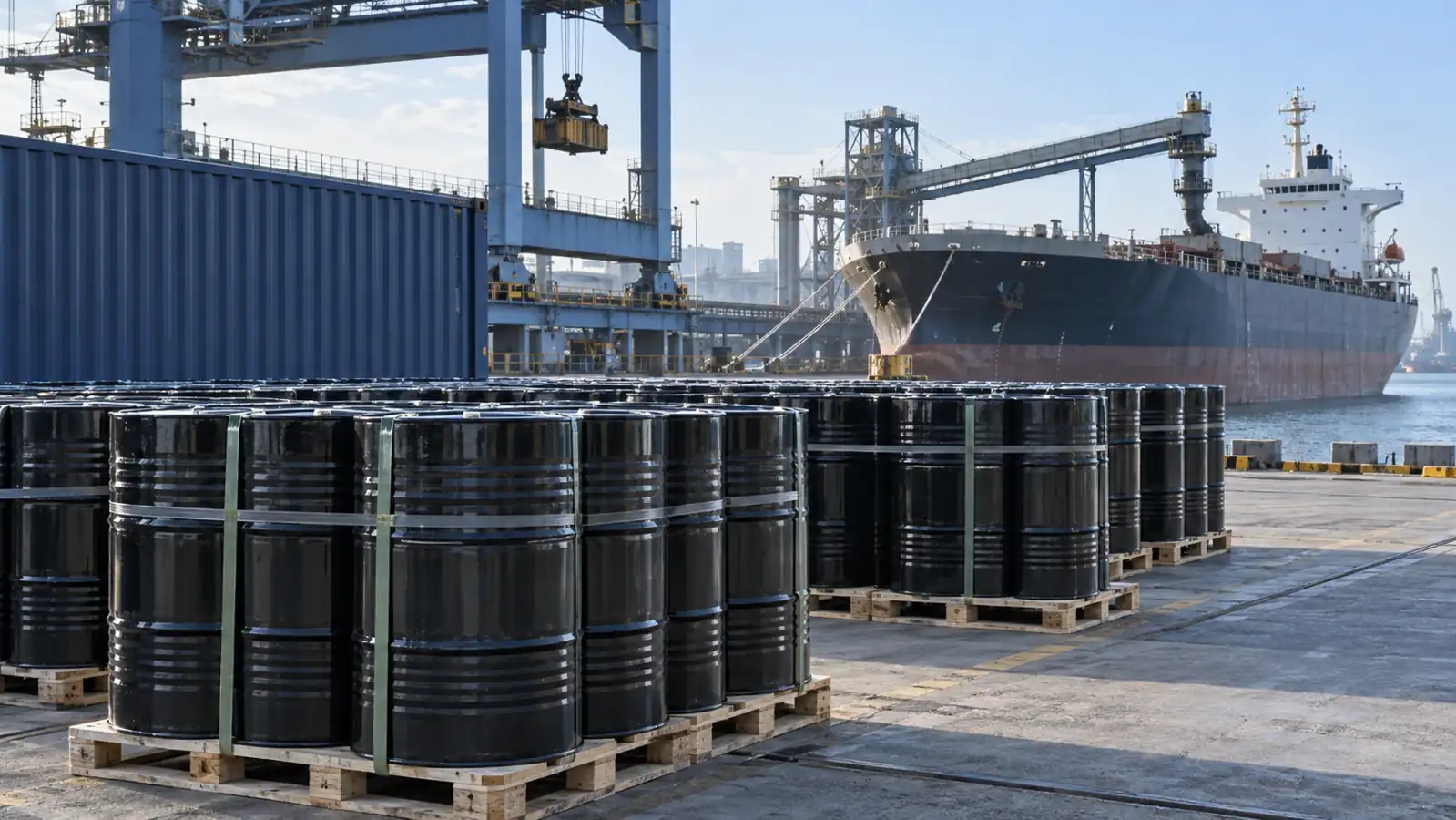
Steel drums can support smaller shipments and facilities without heated bulk reception. Their cost includes the drum itself, filling, sealing, labeling, palletization where required and handling. Drum weight and net product weight must be distinguished. Buyers should check container payload limits, stacking method, restraint, leakage controls and discharge labor. A seemingly attractive unit price can lose its advantage if unusable packaging, high tare weight or damage creates extra cost at destination.
Jumbo bags, cartons or other approved formats may offer different packing economics, but they require suitable handling, climate control and receiving equipment. Bulk bitumen can remove packaging costs, yet demands heated storage, compatible loading facilities and a vessel or tank system suited to the product. Not every port or shipment size can support bulk handling. The RFQ should request one clearly defined packing basis and a separate alternative only if the buyer can actually receive it. Never compare a bulk FOB quote with a drummed FOB quote as though the two offer identical service.
Name the real port and loading point
FOB is a waterborne delivery term, so a quotation described as FOB Erbil, FOB warehouse or FOB land border is not a sound use of the term. For material originating in Iraq or the Kurdistan Region, the commercial route may involve inland road transport before a vessel is loaded at an actual seaport. The specific port, terminal, loading location and product path must be confirmed. Geography alone does not prove that a particular export route is available for a given lot or date.
A supplier may quote a distinct inland basis for delivery to a refinery gate, warehouse or border, and then calculate an FOB offer for a named port. Those are different stages with different costs and risks. Buyers should request the named port of shipment, terminal or berth where practical, expected routing, packaging, shipment window and any dependencies on export permissions. If the seller cannot arrange loading on board the buyer's vessel, an alternative Incoterm may be more appropriate; the parties should resolve that before signing.
Port charges, inspection and loading expenses
An FOB quotation needs an explicit breakdown of what is included up to loading on board. Inland haulage, port gate fees, terminal handling, storage, customs processing, stuffing or stripping, lifting and weighing can vary by route. Some are charged per tonne, some per container or truck, and some arise only after free time expires. Clarifying these items reduces disputes between a headline unit price and the final shipment invoice. It also helps the buyer evaluate whether a cheaper base price hides a more expensive export path.
Independent inspection may cover quantity, packaging condition, marking, sampling, sealing and laboratory testing. Decide who appoints and pays the inspector, where samples are taken, which laboratory and methods apply, and what happens if a result is contested. A certificate of analysis should identify the lot and the measured properties, not merely recite a grade name. Pre-shipment photographs can help document visible condition but do not replace representative sampling or contractual acceptance procedures.
What the buyer still pays after the FOB point
FOB is not a landed-cost figure. Once the cargo is on board, the buyer normally bears ocean freight and the associated voyage exposure under the agreed contract. Marine insurance, destination handling, customs duties, taxes, local trucking, storage, heating and unloading may also fall to the buyer. The exact allocation depends on the sale contract, carriage agreement and local requirements. The buyer should ask its freight forwarder and customs adviser for current destination-specific charges before comparing suppliers.
A useful landed-cost model starts with the accepted FOB value and adds freight, insurance where chosen, import charges, destination terminal expenses and inland delivery. It should also allow for container detention, demurrage, financing, expected handling loss and the cost of any required retesting. The model must use the same net product quantity and currency for every offer. This is particularly important when comparing shipments to the Gulf, African destinations, Europe or Brazil, where port practices and import requirements can differ materially.
FOB versus CFR, CIF and an inland quotation
FOB, CFR and CIF are all sea or inland-waterway Incoterms, but they allocate costs and obligations differently. Under CFR, the seller contracts and pays for carriage to the named destination port while risk still transfers at shipment. CIF adds seller-arranged insurance at the required minimum cover unless the parties agree more. A buyer should not compare a CFR or CIF figure with an FOB number without subtracting or adding the relevant freight and insurance components on a consistent basis.
For a containerized transaction handed to a carrier at a terminal before the vessel is loaded, another delivery term may better match the physical handover. Likewise, inland delivery to a buyer's premises is not FOB. The choice of term should follow the actual control of the goods, not merely the term commonly printed on old invoices. Have both commercial teams and the freight provider agree the delivery point, risk point, carriage responsibility and documentary evidence before a purchase order is accepted.
How to read the quantity and payment terms
A bitumen offer should say whether its price is per metric tonne of net product, per drum, per container or per shipment. It should list minimum order quantity, permitted quantity tolerance, pack size, container count and the method used to establish shipped weight. A large-volume indication may not apply to a small trial order. Equally, a low headline rate may require a schedule, prepayment or vessel commitment that the buyer has not approved.
Payment terms can change the economics. Advance payment, a documentary letter of credit, bank fees, confirmation costs and credit period each affect supplier financing and buyer risk. The quotation should specify currency, validity, payment trigger, document presentation requirements and how discrepancies are handled. Do not send funds solely on the strength of a website listing. Verify the counterparty's legal name, account details and authorized signatories through independent channels, especially if payment instructions change shortly before shipment.
Documents to request with an FOB offer
Before confirming an order, ask for a pro forma invoice that matches the product, grade, quantity, packing, unit price, named FOB port and shipment period. Request the technical data sheet, current certificate-of-analysis approach, safety information and any applicable origin or export documentation. The final documentary set may include a commercial invoice, packing list, bill of lading, certificate of origin, inspection report and other documents required by the destination or payment instrument. The precise set should be agreed rather than assumed.
Consistency matters across documents. Product description, lot identification, net weight, seller name, consignee and port names should agree. A mismatch can delay customs clearance or payment even if the material is technically acceptable. Buyers should decide whether third-party inspection and sealed retention samples are required, then specify this in the contract. A supplier should be able to explain which documents it can issue, when they become available and which third parties are involved.
A practical FOB bitumen RFQ checklist
To receive a useful offer, provide the bitumen grade and full standard, intended use, total net quantity, preferred packing, acceptable tolerance, destination country and nominated loading port if known. Add the planned shipment month, discharge capabilities, inspection requirements, document list, payment preference and whether trial or recurring supply is intended. If the buyer has a specific vessel or forwarder, communicate nomination deadlines and loading restrictions. This information lets the supplier quote a real service scope rather than a speculative price.
Ask each bidder to return the same fields: product origin and lot availability, price per net metric tonne, currency, FOB named port under Incoterms 2020, packing, quantity, validity, loading window, included charges, excluded charges, quality evidence and payment terms. Request that exceptions be marked clearly. A comparison sheet can then separate technical compliance from total cost and execution risk. If a supplier cannot state the port or confirm how the goods will reach the ship, seek clarification before treating the figure as FOB.
How Crude Link can prepare a quotation
Crude Link Trading works with buyers who need a defined bitumen specification and a practical supply plan. A request may begin with a target grade and estimated quantity, but a firm export quotation requires confirmation of available material, packaging, route, port capacity, shipment timing and documents. We do not publish a fixed FOB number because those conditions change and a generic rate could mislead a purchaser. An inquiry gives our team the basis to evaluate what can be offered at the relevant time.
If your project is in Iraq, see our Iraq bitumen price guide for domestic pricing factors and our bitumen product page for grade and packing information. For a proposed export shipment, send the named port and destination alongside the technical specification. We can then discuss whether an FOB basis is feasible or whether another delivery term better reflects the intended transaction. Any offer remains subject to written confirmation of product availability, route, compliance and commercial terms.