
Editorial note: “Best” is used as a buyer-selection topic, not an unverifiable ranking. International market references describe transaction routes Crude Link can evaluate, subject to confirmed supply, compliance, logistics, and contract.
What makes a bitumen exporter the right choice?
The phrase best bitumen exporters in Erbil should not be treated as a simple popularity ranking. For a professional buyer, the right exporter is the company that can translate a project requirement into a controlled commercial supply: the correct grade, a measurable specification, suitable packaging, traceable quality documents, a workable route, and clear contractual responsibilities. Low headline pricing has little value if the offer leaves the loading point, inspection scope, delivery basis, or document issuer unclear. A sound comparison begins with evidence and an aligned scope, not promotional claims.
Buyers should therefore evaluate exporters through a repeatable checklist. Confirm the legal contracting entity, product origin, available grade, applicable test standard, quantity tolerance, packing method, loading schedule, Incoterm, payment method, inspection arrangement, and claims procedure. Ask whether the exporter can explain every line of the quotation and identify which party performs each task. Crude Link uses this buyer-first approach for inquiries in Erbil, the Kurdistan Region, Iraq, and international markets. It allows commercial proposals to be compared on equivalent terms and helps prevent expensive misunderstandings after an order is placed.
Why Erbil matters in regional bitumen trade
Erbil is an important commercial centre for the Kurdistan Region and a practical coordination point for infrastructure, construction, and energy procurement across northern Iraq. Buyers, contractors, consultants, logistics companies, and trading houses use the city to discuss specifications, project schedules, border routes, and supply options. That commercial role does not automatically mean every tonne offered by an Erbil-based company is manufactured or physically loaded inside Erbil. A responsible exporter should distinguish its office location, the product's declared origin, the actual loading point, and the contractual seller instead of allowing those facts to blur together.
This distinction is especially important for international buyers searching for a bitumen exporter in Iraq or a bitumen supplier in Kurdistan. The value of an Erbil commercial presence lies in market access, regional coordination, local communication, and the ability to connect project requirements with qualified supply and logistics options. Before contracting, the buyer should receive the proposed origin, plant or terminal details when applicable, export route, and document list. Crude Link reviews these elements for each inquiry because availability, border conditions, shipping space, and product allocation may change. Final commitments are made only in the signed quotation or contract.
Define the grade and specification before comparing exporters
Bitumen is not one interchangeable product. Common penetration grades include 40/50, 50/70, 60/70, 80/100, and 85/100, while some projects require viscosity-graded, performance-graded, oxidized, cutback, emulsion, or polymer-modified materials. A request that says only bitumen does not give an exporter enough information to prepare a reliable offer. The buyer should identify the grade, governing standard, required test methods, destination regulations, application, and any project-specific limits. Road paving, waterproofing, roofing, industrial processing, and blending can require very different products and handling arrangements.
For penetration-grade material, the inquiry may address penetration, softening point, ductility, flash point, solubility, specific gravity, loss on heating, and retained penetration after heating. However, a website summary or typical value is not a shipment guarantee. The controlling values should be recorded in the agreed specification and supported by the applicable certificate for the offered or shipped material. Exporters should avoid silently substituting a nearby grade. Buyers should likewise avoid comparing a 50/70 quotation with a 60/70 quotation as though they were identical. Technical alignment is the foundation of a meaningful price comparison.
Quality assurance, COAs, sampling, and inspection
A credible export proposal explains how quality will be demonstrated. Buyers should request a certificate of analysis or relevant laboratory report and confirm who issued it, what batch or material it represents, which test methods were used, and whether the results match the contractual limits. Manufacturer-provided supporting documentation should remain clearly attributed to its original issuer. A trader may present or summarize that documentation, but should not alter the identity of the laboratory or manufacturer. This preserves traceability and gives the buyer a defensible quality record.
For higher-value or sensitive shipments, the contract may require sampling and inspection by an agreed independent company at the plant, terminal, loading point, or destination. The parties should define sampling procedures, sealed sample retention, quantity or weight determination, certificate timing, and which result governs acceptance. Inspection is most effective when it is designed before loading rather than added after a dispute. Crude Link encourages buyers to state the required inspection scope in the RFQ so its cost and timing can be included from the beginning. Final inspection arrangements remain subject to location, inspector availability, and contractual agreement.
Choose packaging for the route, climate, and handling system
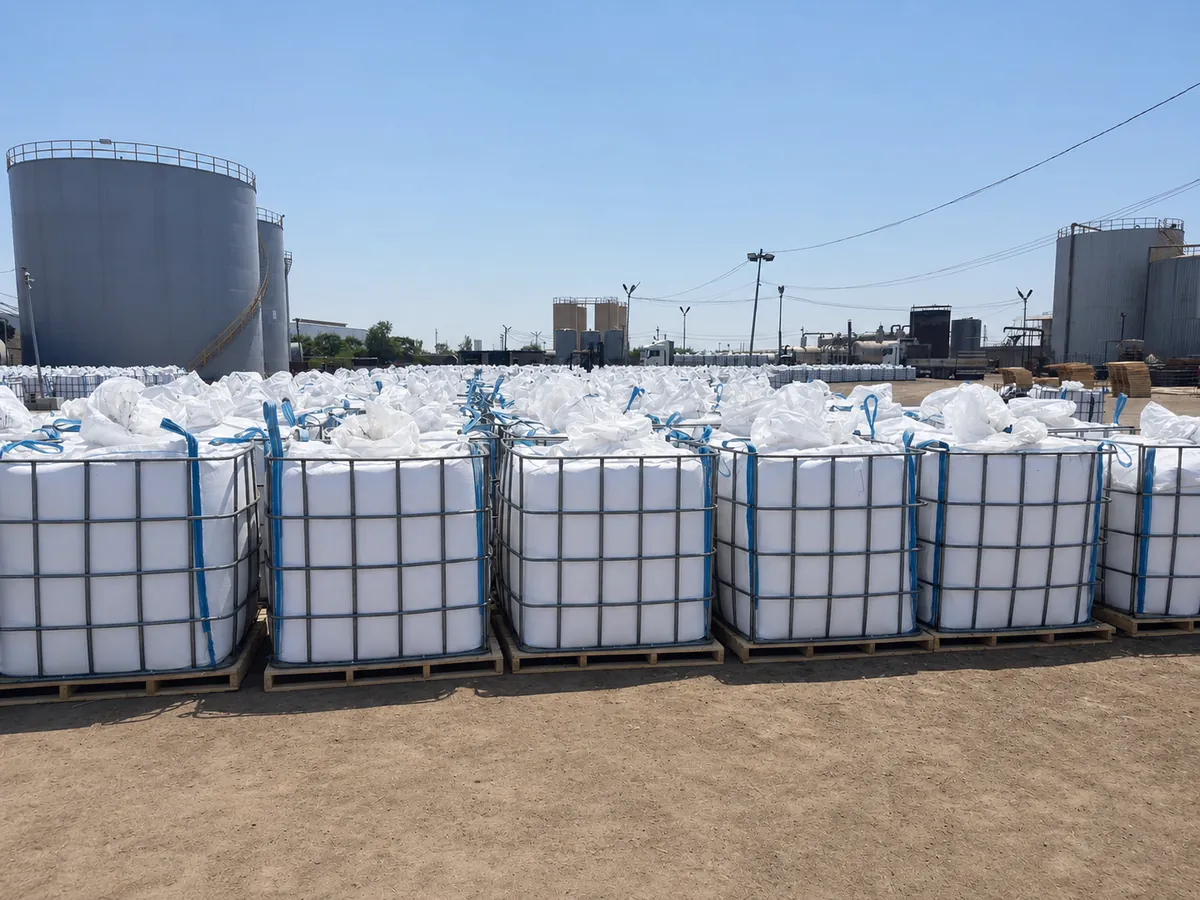
Packaging affects cost, payload, handling speed, storage, product protection, and destination acceptance. Steel drums can suit conventional break-bulk or containerized handling where the receiver has labour and equipment for unloading and decanting. Jumbo bags can improve unit handling for some solid or semi-solid bitumen programs, but their liner, filling weight, support system, temperature limits, and destination handling method must be confirmed. Bulk supply can reduce packaging waste and handling, although it requires heated tanks, suitable loading and discharge equipment, compatible transport, and enough volume to justify the system.
The best format is therefore route-specific rather than universally superior. An exporter should provide the nominal and permissible net weight, packing material, pallet or cage configuration where used, container loading plan, estimated payload, marking method, and photographs or drawings when relevant. Buyers should confirm whether packaging must meet local environmental, recycling, fumigation, or labelling rules. They should also consider heat exposure and storage duration. A package that performs well on a short regional route may need additional protection for a long ocean voyage to Europe, Africa, or Brazil.
Documents and compliance that support an export shipment
International bitumen shipments require more than a commercial invoice. Depending on the route and contract, the document set may include a packing list, certificate of origin, bill of lading or road transport document, certificate of analysis, weight certificate, inspection certificate, insurance certificate, safety data sheet, and product or customs declarations. The named seller, buyer, consignee, origin, quantity, packing, and product description should remain consistent across the file. Discrepancies can delay customs clearance, payment under a letter of credit, or release at destination.
Import rules, sanctions screening, restricted-party controls, tax treatment, and technical conformity requirements differ by jurisdiction and may change. Neither an attractive price nor a familiar Incoterm replaces a transaction-specific compliance review. Buyers and exporters should identify the banking route, destination, end use, intermediaries, carrier requirements, and documentary wording before shipment. Where a letter of credit is used, the documentary requirements should be checked for practicality before issuance. Crude Link evaluates commercial inquiries subject to applicable law, internal compliance review, confirmed supply, and acceptable payment and logistics arrangements.
Planning bitumen exports to Dubai and the UAE
Dubai is a major commercial, logistics, and re-export hub, but an inquiry for bitumen export to Dubai still needs an exact delivery plan. The buyer should specify whether the cargo is intended for local UAE use, free-zone storage, onward re-export, or delivery to another emirate. The selected port or land route, consignee status, customs procedure, storage facility, packaging format, and onward transport can materially affect cost and documentation. Offers should identify whether delivery is at origin, to a named port, or to a named inland location under an agreed Incoterm.
Climate and handling also matter. High ambient temperatures can influence storage and packaging choices, while local facilities may have specific rules for receiving drums, jumbo bags, containers, or bulk material. For a Dubai quotation, include grade, specification, volume, monthly schedule, delivery address or port, packing, required UAE documents, inspection scope, and intended use. Crude Link Trading's registered office in Dubai supports commercial communication, but every proposed shipment remains subject to confirmed origin, availability, route feasibility, compliance approval, and a written offer. Buyers should rely on the final contract rather than assuming a standing route or stock position.
Planning exports to African markets
Africa is not one destination or one regulatory market. A bitumen inquiry for Africa must name the country, port, inland delivery point, road or industrial application, import regime, project standard, and expected discharge capability. Requirements in East Africa, West Africa, North Africa, Central Africa, and Southern Africa can differ in specification, climate, port infrastructure, currency controls, taxes, and acceptable packaging. Transit to a landlocked destination adds border crossings, inland haulage, and storage considerations that may be as important as the ocean freight.
Buyers should request a route-specific proposal rather than a generic Africa price. The exporter needs the destination port, final city, required grade, shipment size, container or vessel preference, desired delivery window, documents, and whether the buyer has an importer of record. Seasonal port congestion and infrastructure constraints should be reflected in schedule planning. Crude Link can review qualified African inquiries and coordinate an offer where compliant supply and logistics are available, but it does not present every African country as an identical or permanently available lane. Clear destination data produces a more useful and defensible quotation.
Planning exports to Europe
European buyers typically require careful alignment between contractual specifications, applicable standards, product classification, safety information, sustainability expectations, and import documentation. The requested grade should be connected to the specific application and national or project requirement rather than selected only by a familiar name. Buyers may ask for EN-related conformity, additional laboratory evidence, independent inspection, supplier declarations, traceability, or environmental data. The precise obligations depend on the product, end use, country, and role of each party in the supply chain.
A bitumen export Europe inquiry should identify the destination country and port, buyer or importer details, required standard and test methods, packaging, quantity, schedule, language requirements, and proposed delivery basis. Long-distance transport can alter the economics of drums, jumbo bags, containers, break-bulk, or bulk parcels. The exporter should also assess carrier acceptance and port handling before confirming the format. Crude Link can evaluate European opportunities on a transaction basis, subject to legal, technical, documentary, banking, and logistics feasibility. This wording is more responsible than promising universal European coverage without knowing the destination or specification.
Planning exports to Brazil
Brazil is a substantial and geographically distant market, so a bitumen export Brazil proposal requires detailed preparation. The buyer should specify the Brazilian port, final delivery location, importer information, product grade, governing technical requirement, packaging, quantity, shipment window, and Portuguese-language documentary needs. Ocean transit time, transshipment risk, port charges, customs procedures, container availability, and inland distances can materially influence the landed cost. A price to Santos, for example, cannot automatically be treated as a delivered price to an inland asphalt plant.
Packaging durability deserves special attention on a long-haul route. The parties should confirm container loading, weight limits, securing, heat exposure, liner performance, marks, and unloading capability at destination. They should also determine who is responsible for Brazilian import licensing, classification, taxes, conformity, and local clearance. Crude Link can review a complete Brazilian RFQ and investigate qualified supply and logistics options; this is not a claim that every grade or shipment size is continuously available. A written offer should state the actual origin, loading point, route, validity, and conditions applicable to that transaction.
Compare Incoterms, freight, payment, and landed cost
Exporter quotations must be compared on the same delivery basis. EXW, FCA, FOB, CFR, CIF, CPT, CIP, DAP, and other Incoterms allocate costs and risks differently, and some terms are unsuitable for a particular transport mode or operational structure. A lower FOB figure may lead to a higher landed cost if the buyer faces expensive ocean freight, insurance, destination handling, demurrage, customs brokerage, inland haulage, or packaging disposal. Each offer should name the exact place or port and the applicable Incoterms edition.
Payment terms also influence risk and price. Advance payment, staged payment, documentary collection, and letters of credit create different banking costs and documentary obligations. Buyers should verify beneficiary details through a controlled channel and treat last-minute bank-account changes as a fraud warning. For a fair comparison, build a landed-cost sheet that includes product, packaging, origin handling, inspection, freight, insurance, port charges, taxes, customs, inland delivery, finance costs, and a schedule contingency. A strong exporter will help clarify the commercial components without disguising exclusions inside a headline rate.
RFQ checklist for selecting an Erbil bitumen exporter
A complete RFQ should state the buyer's legal name and country, product and grade, standard and test limits, total and monthly quantity, packaging, exact destination, preferred Incoterm, required delivery period, inspection scope, document list, payment preference, and end use. Attach the approved specification or tender sheet where possible. If alternatives are acceptable, identify which points may vary. This information lets exporters test supply, packaging, route, and compliance feasibility before quoting, and it reduces the cycle of provisional prices that later change when missing requirements appear.
Crude Link Trading supports buyers seeking bitumen supply coordination from Erbil, the Kurdistan Region, and Iraq, as well as qualified international inquiries involving Dubai, selected African markets, Europe, and Brazil. The company does not define best through an unsupported superlative. Its objective is to prepare a transparent, technically aligned, and commercially workable offer backed by clearly attributed quality documentation. Send the full requirement through the Request a Quotation form. Availability, origin, loading point, export eligibility, logistics, pricing, and delivery are confirmed only in Crude Link's written quotation and final contract.